


Photo Alchemy
 Photo AlchemyThe workbench
 Collage and montageCut and rebuilt
 African Art FusionWith Simon Shone


 Majestic Panoramas
More collections


Twenty eight collections, and more being added
Photo AlchemyThe workbenchCollage and montageCut and rebuiltAfrican Art FusionWith Simon Shone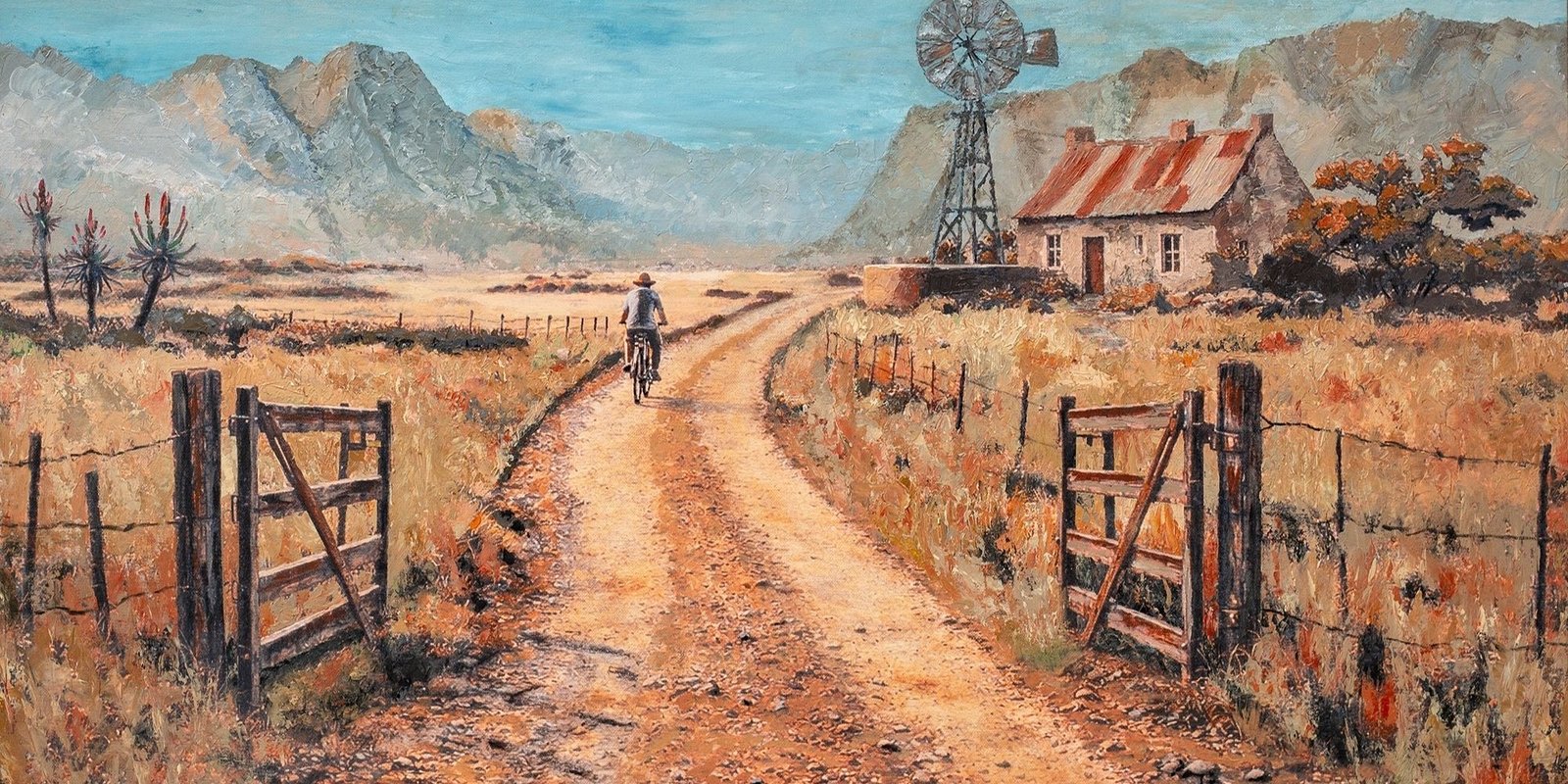
Every artist eventually faces the same moment: the blank canvas.
For some, that moment is complete freedom. There are painters who can begin with nothing more than an empty surface and bring a whole world into being purely from imagination. Others can copy a photograph so precisely that the painting becomes almost indistinguishable from it.
I'll be honest, I don't fall into either of those categories.
Perhaps because my journey began with photography, I have never wanted to reproduce a photograph exactly as it is. The camera already does that perfectly well. What draws me in is the space between memory, experience and interpretation, the place where a scene begins to grow beyond what the lens first captured.
Over many years of photographing landscapes I have built up large archives. Some pictures were taken in perfect conditions and became part of a finished body of work almost at once. Others hold something special, a strong composition or a quality of light, but never quite make it: a small element that doesn't work, a moment that wasn't fully there. Those are rarely thrown away. They sit quietly in the archive, waiting.
Often it is years later, when I come back to them, that I rediscover not only the photograph but the whole experience around it. Even when the emotion of that day has softened, the memory of the place stays vivid: the wind on my skin, the warmth of late afternoon light, the scent of dry earth and open veld. The photograph becomes a doorway back into that moment.
It is from that place that Fields of Gold was born.
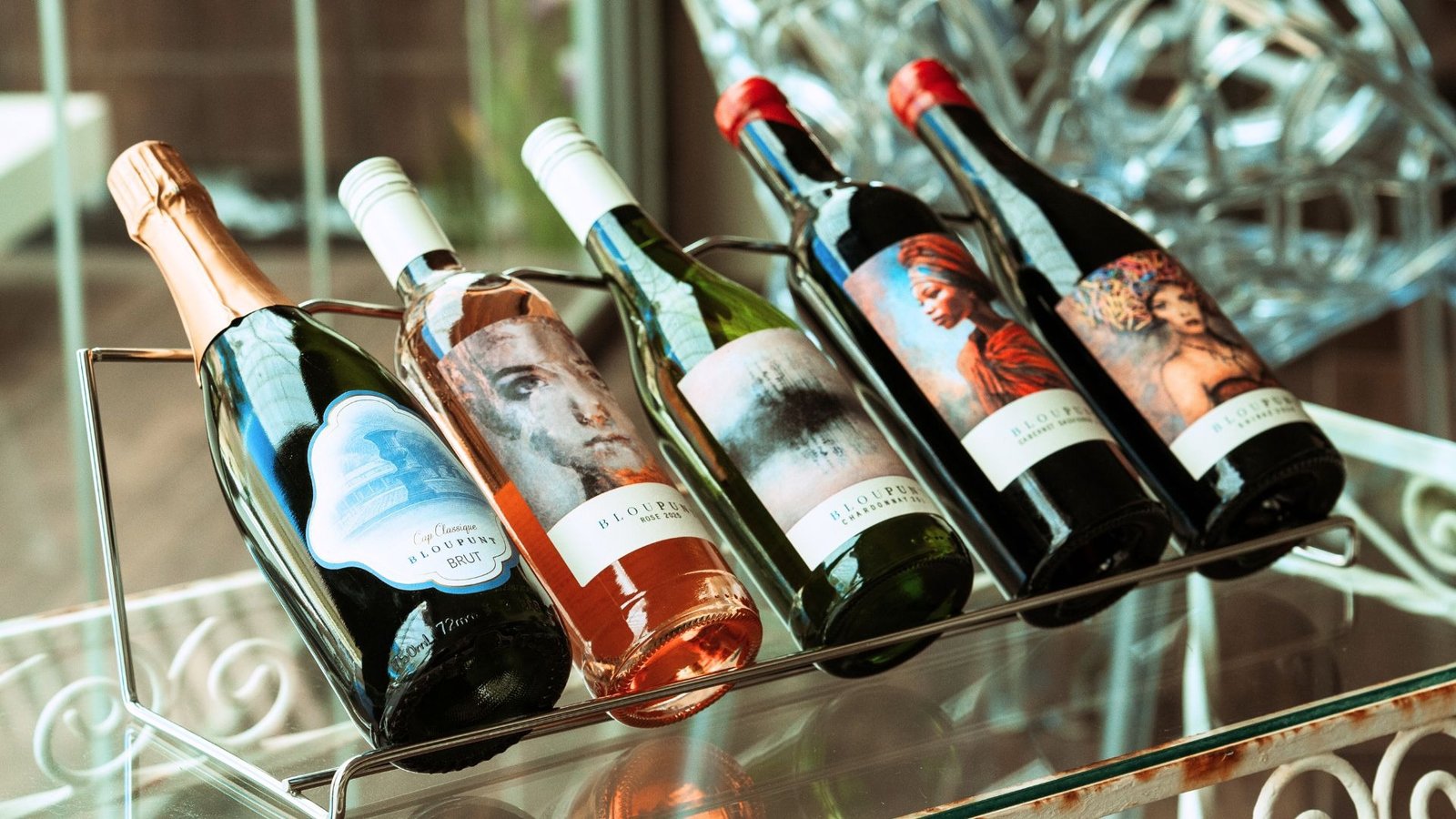 The Bloupunt wines, with our art labels
The painting draws on the countryside around Montagu in the Western Cape, at the entrance to the Klein Karoo. If you have ever driven to Montagu, you'll know the town lies tucked deep in the folds of the Langeberg. Coming in through the narrow canyon feels like entering a hidden valley.
Beyond the town, towards Barrydale, the Koo Valley, or along the gravel roads that branch away from the main routes, the land opens up. Fertile farming valleys give way to the semi arid Klein Karoo: ochres, browns, dusty golds and soft earth tones stretching towards distant mountains. It is a place of incredible quiet.
My family and I have spent a great deal of time here. Our gallery is at Bloupunt Winery in Montagu, a wine and art destination on Route 62 where visitors can taste wine alongside a curated selection of artworks. The Bloupunt wines carry art labels we have created, so visitors can take a little piece of that connection home.
So we often travel through the surrounding countryside, sometimes as a family for the pleasure of it, and sometimes in search of pictures. The early morning and late afternoon drives are usually on my own, or with my daughter, Samantha Lee Osner, a fellow artist who paints and works in mixed media, with the camera as part of her process. It is on those quiet drives that unexpected scenes reveal themselves.
A gravel road turning through an open gate.
A windmill slowly turning above a small farm cottage.
A valley opening between distant mountain ridges.
These moments stay with you.
 Fields of Gold, 100 x 76 cm
One of the most striking things about the Klein Karoo is its palette. Unlike the lush farmland of the wider Western Cape, it keeps to a far more restrained range. Fynbos and semi arid vegetation give ochres, browns and dusty golds rather than deep greens.
When I painted Fields of Gold, I consciously resisted the brighter greens and yellows we might expect of farmland, and stayed faithful to the feeling of the region, the muted earth tones that give the Karoo its character. To strengthen that, I laid subtle tonal washes over the finished painting, so the landscape settles into warmer, more weathered hues.
The result is less about one particular farm, and more about the atmosphere of the region itself.
One of the real advantages of working in both photography and painting is the freedom to bring experiences from different moments into a single scene.
The Langeberg mountains that frame this landscape are especially beautiful in the early morning. As the sun rises in the east, warm tones brush across the ridges and leave pockets of glowing colour along the slopes. Yet the blue mountains of Montagu, the ones that gave the old Bloupunt farm its name, are at their most dramatic late in the afternoon, when the sun drops behind the ranges, large areas fall into shade and the distant mountains turn a soft blue.
In reality those two kinds of light never happen at the same time. Painting lets them meet. In Fields of Gold the warmth of morning on the mountains merges with the cooler blue of the distant ranges, memories from different times of day in one harmonious moment.
Travelling through the Karoo, I am always struck by how many farm gates stand wide open. There is something deeply symbolic in that. Rather than keeping you out, the open gate seems to invite you in, to suggest the road ahead is part of the journey. As a photographer, I have always struggled to resist an open gate. If a road leads beyond it, I almost always feel I have to follow.
That urge, to move beyond the obvious and let a place reveal itself slowly, has shaped not only the way I photograph, but the way I experience landscape itself. In the painting, the road passes straight through just such a gate, and leads your eye into the landscape and on towards the homestead.

In Fine Art Photography is about Much More than what You See, I talk about photography as memory and connection rather than equipment, and tell the story of the morning I let myself through an unlocked farm gate before dawn, and met the farmer on the way out.
Watch on YouTube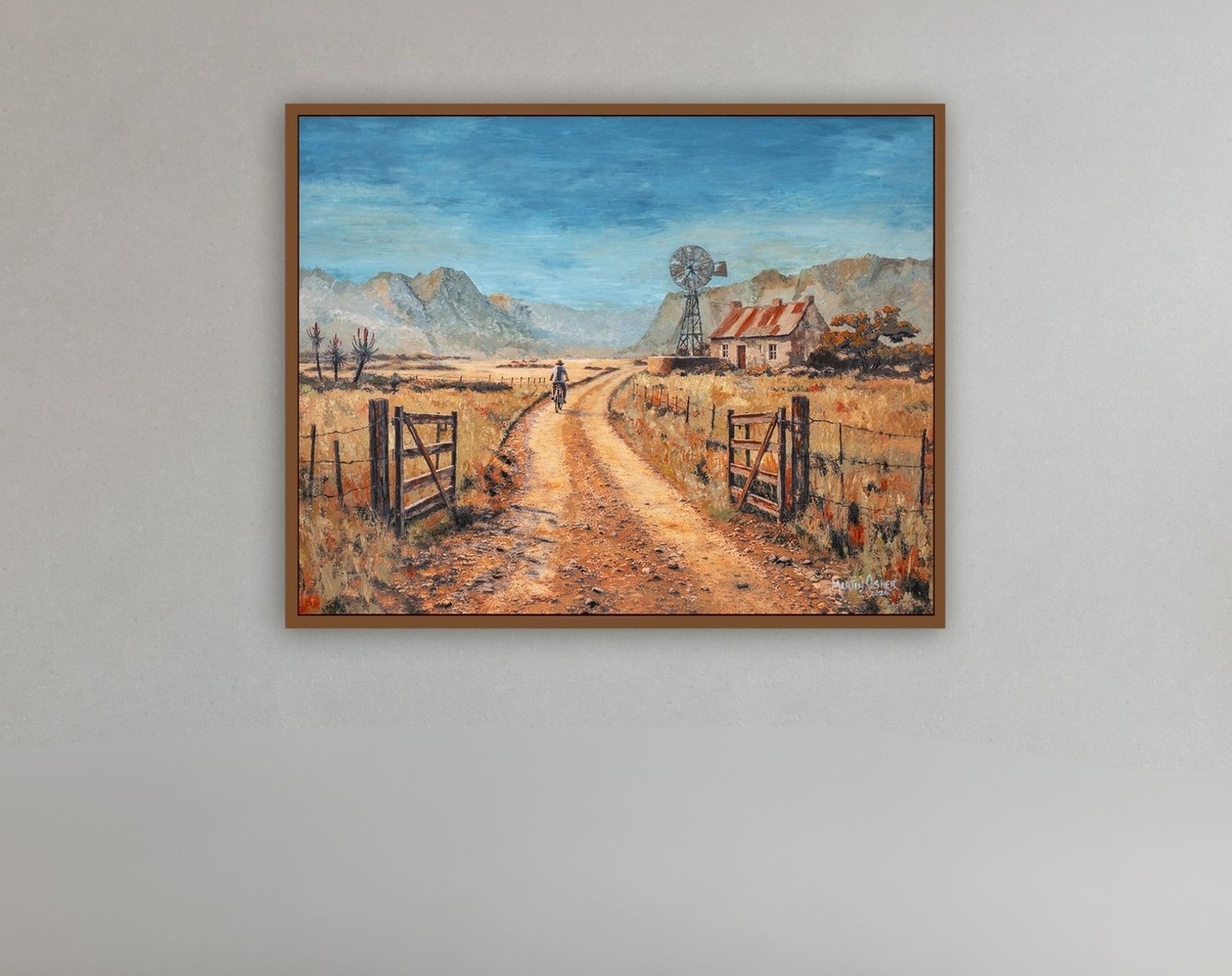 Fields of Gold, framed
Landscapes often feel more powerful with a subtle trace of people. As I composed the painting, I felt the scene needed a figure, not to dominate, but to remind us that someone lives in this quiet space. Rather than place a person near the homestead, I painted a solitary cyclist on the road, for the farmers, workers and families who live every day in the rhythm of this countryside.
No Karoo farm scene would feel complete without a windmill. Across the region they have pumped water from underground for generations, many of them old and weathered, still standing as quiet symbols of life in a semi arid land. For a moment I thought of leaving it out, worried it might feel too predictable. Very quickly I realised its absence would feel unnatural. The windmill belongs here.
Although Fields of Gold is a painting, its roots lie in years of photographic exploration. Parts of the scene come from photographs taken around Montagu and the Koo Valley over many years: the mountains, the roads, the farm buildings, the quiet rhythm of rural life. Painting let me draw on those memories and fragments, and put together a scene that holds not just what was seen, but what was felt.
In that sense the camera becomes simply another tool on the artist's workbench. Sometimes it makes the final artwork directly. Sometimes it is the foundation for mixed media or a painterly interpretation. And sometimes, as with this painting, it is the bridge between experience and imagination.
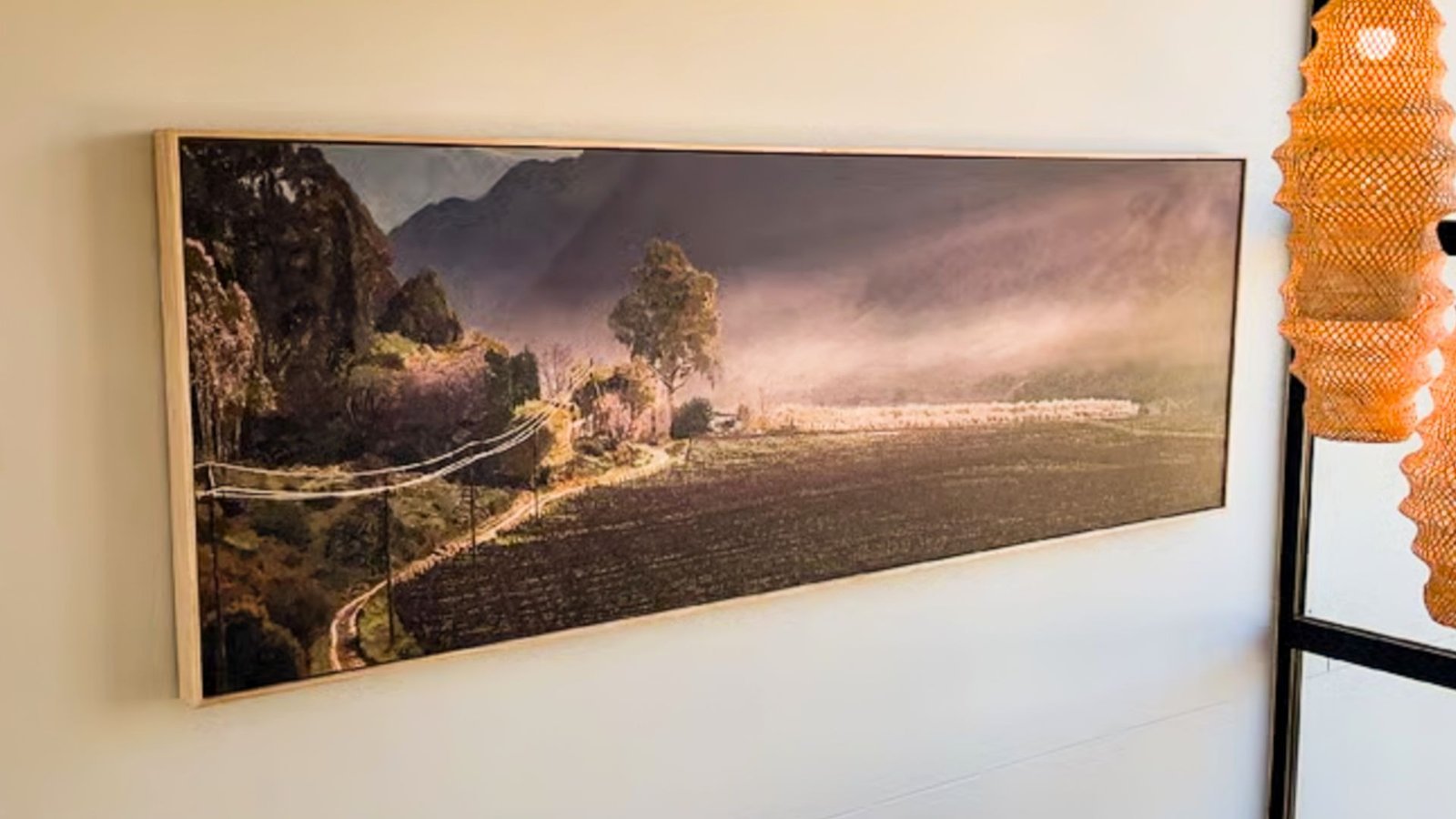
 Majestic Homestead, the photograph, a panoramic print
Majestic Homestead is a good example. It is a panoramic photograph made at first light in the Koo mountains, a finished work of art in its own right, and still one of the most loved prints in our galleries. It also shows how some scenes stay with us and keep inspiring new directions. A client fell in love with it and wanted to live with it as a painting, so I was commissioned to paint the scene more than three metres wide, faithful to the original composition, while the painted surface brought a different emotional quality to the work.
That, to me, is the beauty of working across photography, mixed media and painting. The camera is not in competition with the brush. It is simply another instrument through which art can begin.
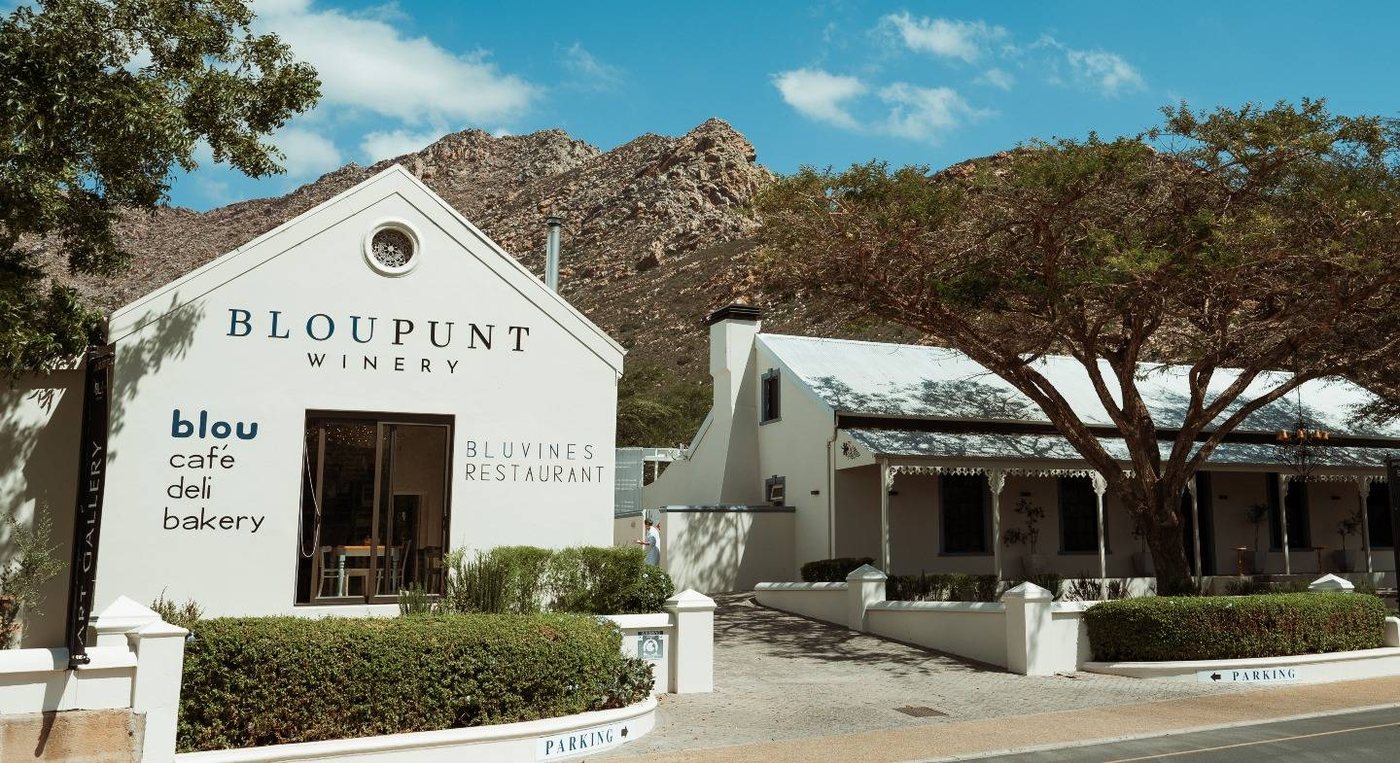 Bloupunt Winery, Montagu
If this story makes you want to try it, this is where it happens. For five days in Montagu, Samantha Lee Osner and I teach you to turn your own photographs into paintings, working from pictures you took yourself, so the blank canvas is never blank.
No painting experience is needed. We move between the easels rather than lecture from the front, with palette knife work and loose brushwork, out with the camera early and late, and the Karoo landscape that inspired Fields of Gold a short drive away. You leave with a finished painting that is unmistakably yours.
Fields of Gold is not the result of a single moment. It gathers many experiences: early morning drives, quiet gravel roads, conversations with farmers, and the vast open spaces of the Klein Karoo. It is the feeling of standing in a landscape where the world seems to slow down.
A place where the wind moves gently across golden fields.
A place of quiet.
Texture plays a large part in a painting, and a photograph can never fully capture the depth and character of the surface. If Fields of Gold speaks to you, a commission keeps the same style, the same feeling and the same hand, and becomes a painting of its own. You can see our work in person at Osner Gallery in Hout Bay and at our gallery at Bloupunt Winery, Montagu.
Martin Osner

Sold through Osner Art Gallery online, shipped worldwide, and shown in person at Osner Gallery in Hout Bay.
Go to the gallery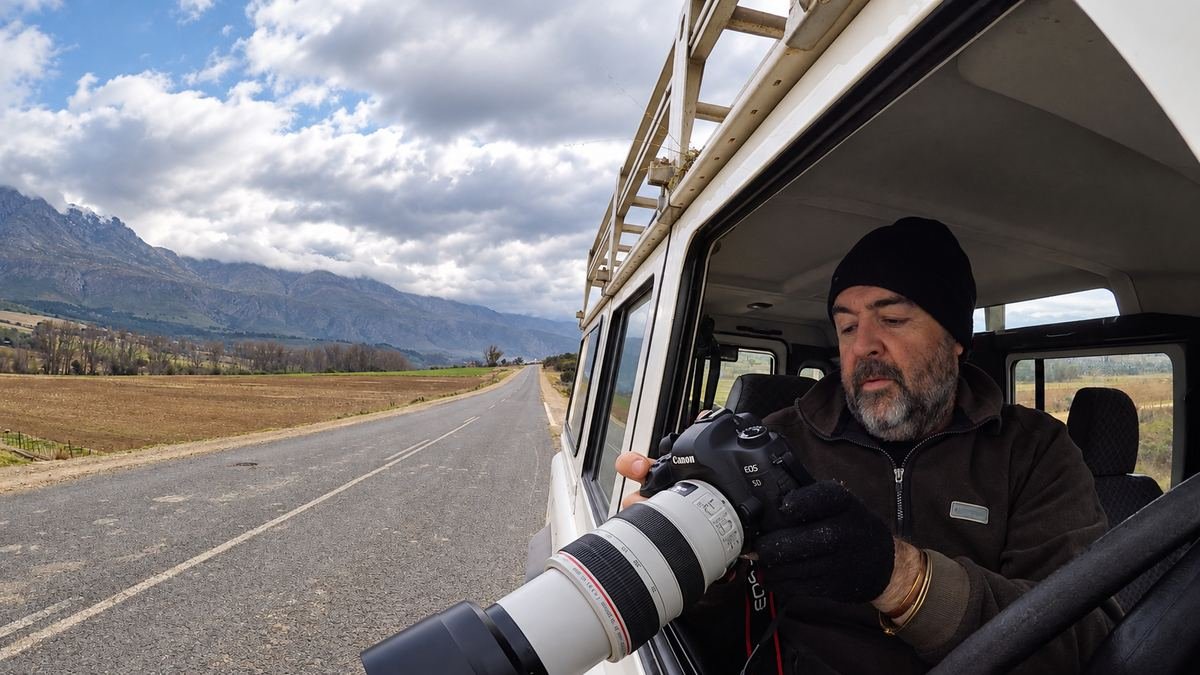
Online courses at the Art Photography Academy, live fine art classes on Zoom, and workshops on location.
See the coursesNew work and the stories behind it, exhibitions at the gallery and at INARA, and workshops with Samantha and Martin. Unsubscribe with one click, whenever you like.
We never share your address.