


Photo Alchemy
 Photo AlchemyThe workbench
 Collage and montageCut and rebuilt
 African Art FusionWith Simon Shone


 Majestic Panoramas
More collections


Twenty eight collections, and more being added
Photo AlchemyThe workbenchCollage and montageCut and rebuiltAfrican Art FusionWith Simon Shone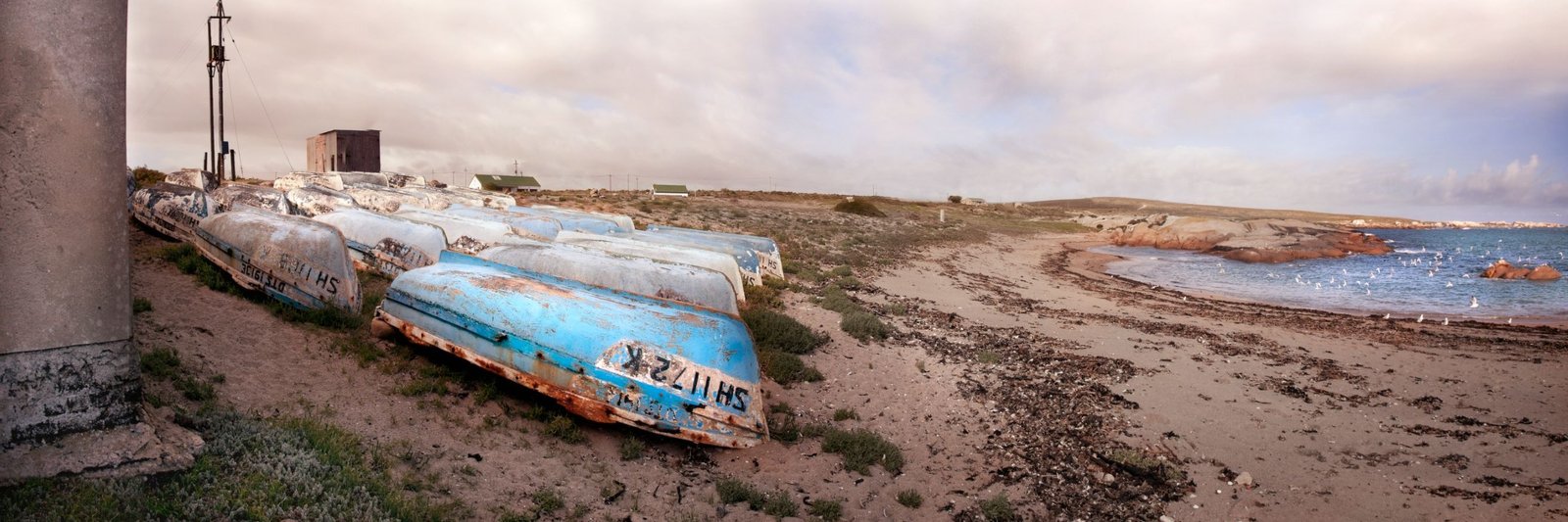
Not every piece of work arrives with intention. Some of the best ones begin quietly, as something else entirely.
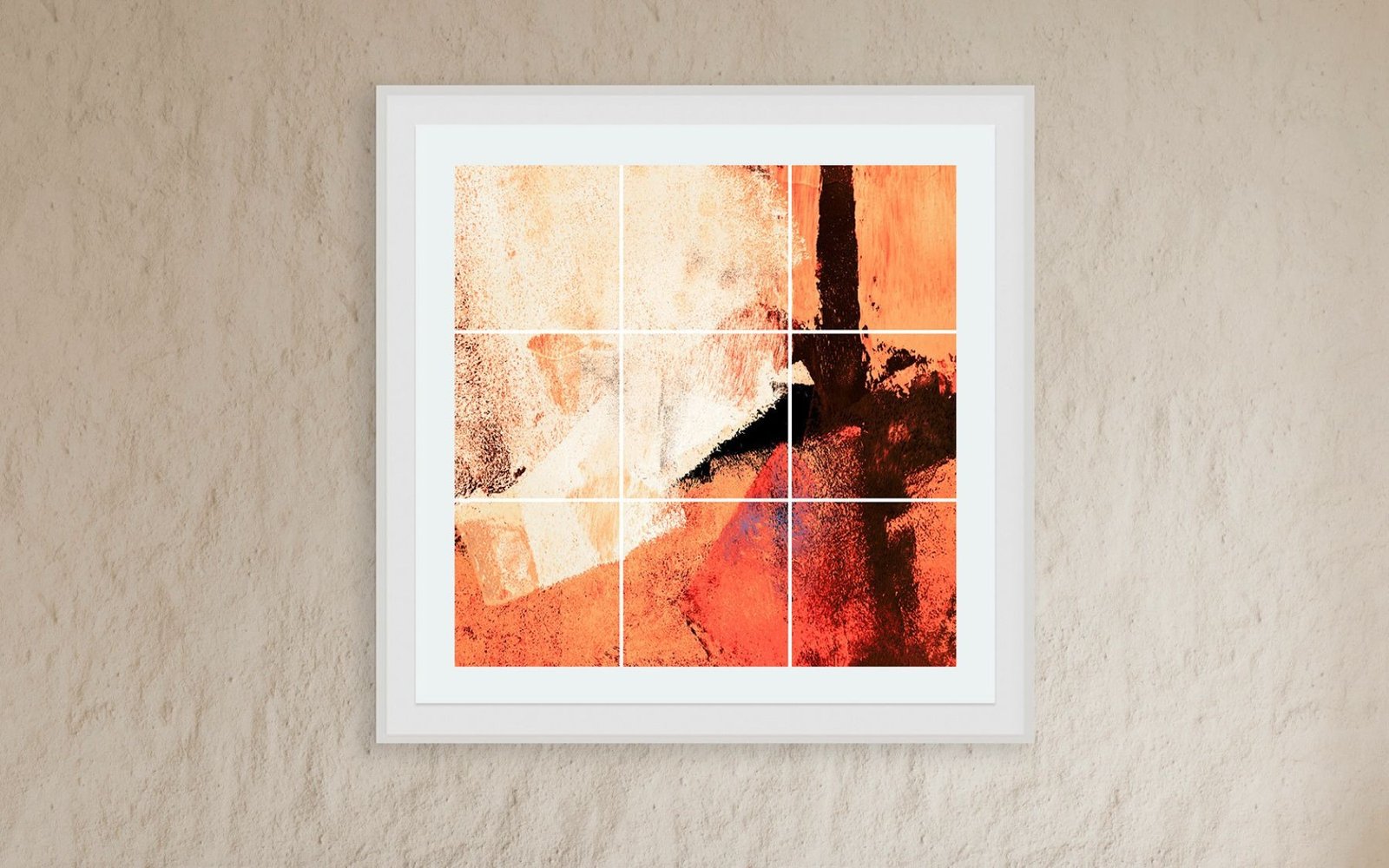
Analogous Anthology No.7 came into being almost by accident. I was in the middle of a commission, and the paint roller still had colour on it when the main work was done. Rather than clean it off and move on, I started rolling the excess onto spare paper nearby. At first it was simply a practical thing to do, clearing the roller and not wasting what was left. Then something started happening on the surface. The layers built up. Shapes appeared where I had not planned any. Textures began talking to one another.
The original paint was in blue tones. As I looked at what was forming, I felt the piece needed to go somewhere more intense, deeper into the spectrum. I shifted it towards orange and red, and that is when it found its identity. What began as leftover paint on scrap paper became one of the most energetic works in the collection.
 Analogous Anthology No.1
The series did not start with paint rollers. It started with fishing boats pulled up on a beach, and a close look at what time and salt water do to a surface.
What drew me in was not the boats as objects. It was the antifouling paint that had cracked and faded and peeled in the most extraordinary ways. The damaged gunwale of one boat, looked at a certain way, suggested the edge of a coastline, or the inlets of a harbour. I photographed the details selectively, not to record what the boats were, but to gather fragments I could later reassemble into something else entirely.
In the finished work, Analogous Anthology No.1, those aged surfaces became a Dutch harbour beneath a winter sky, with the last warmth of late light still sitting in the composition.
Back in 2013 I was running my first fine art photography gallery, and working on No.1 at the time. My wife came in to look at it. She does not naturally gravitate towards abstract work, so I have learnt to pay attention when something stops her. She looked at it for a moment and said exactly that.
She was right. It became one of the three best selling works in the gallery's history, and only a few prints of the edition of fifteen remain.
I have always believed that art is not found only in grand subjects or dramatic landscapes. It hides in the worn, the overlooked, the broken. A surface most people would walk past can become, if you are paying the right kind of attention, the foundation of something lyrical.
At the heart of this collection is a way of working that sits somewhere between photography and painting. Traditional photography is often about the decisive moment, a scene as it is, framed within a single exposure. There is real value in that. Photographic montage offers a different possibility. It lets the lens shift from recording to interpretation. Rather than freezing reality, it reshapes it.
The lens becomes a tool for gathering fragments: rhythms, textures, surfaces, impressions. These are brought together into something more expressive, and often more emotionally charged, than the original subject ever was. The result still carries the DNA of photography, but it enters the space of fine art differently. It breathes differently. It asks the viewer not just to look, but to experience.
That is what draws me to it. The picture can become a constructed visual experience, one in which overlap, tension, imperfection and movement are part of its language.
 No.1, the sky over Hout Bay
 No.2, a winter afternoon over the Atlantic
 No.3, Table Mountain made from rock
Earth Wind and Fire comes straight from David Hockney, and from his joiners in particular. Each scene is photographed section by section, then loosely montaged back together, so the edges never quite meet and the picture keeps moving. That imperfection is the point. A seamless join would turn it back into a record.
I was introduced to Hockney's work by one of my own students, Sandy Mclea, who is now one of the artists shown at Osner Gallery. I have always loved the contact sheet look you get from classic darkroom printing, and I think this is a natural progression from it.
No.1 is the sky from the studio above Hout Bay, horizon to horizon. No.3 is not a sky at all: twenty five photographs of rock beside a pool near a waterfall on Table Mountain, rebuilt into the shape of Table Mountain itself.
 Mirror Island No.2
A very different mood appears in the Mirror Island series. Here the process is symmetrical and contemplative. Trees are photographed once, then mirrored, so a horizon appears in the middle of the picture and the trees become an island suspended in still water. Nothing in the scene was ever water.
The nearest comparison I can find is something many of us did as children: folding a painted sheet of paper in half, opening it again, and finding something unexpected in the mirror. The principle is the same, but worked photographically, and with far more control over structure, tone and mood.
The forms belong somewhere between landscape, reflection and dream. Nature is not repeated for effect, it is transformed. They are illusions, but they do not feel false. They feel discovered.
Mirror montage is now one of the lessons in Going Further in Art Photography.
Analogous Anthology, Earth Wind and Fire, Mirror Island: what these series share is not just technique. So much of the strongest work begins in an unplanned moment, leftover paint on spare paper, a cracked surface on a boat, a sky seen from the studio window in the last light of evening.
Experimentation is not a luxury in the creative process. It is usually the door through which the best work enters. When we stop insisting that the lens must only describe reality, we begin to use it in a richer way, not only to observe, but to construct. To paint with light, shape, rhythm and energy.
Analogous Anthology No.7 is a reminder of that. It came out of process, out of movement, out of not wasting what was left behind. Creativity does not always arrive neatly and on cue. Sometimes it appears in the margins of another task, waiting to be recognised.
Martin Osner

Sold through Osner Art Gallery online, shipped worldwide, and shown in person at Osner Gallery in Hout Bay.
Go to the gallery
Online courses at the Art Photography Academy, live fine art classes on Zoom, and workshops on location.
See the coursesNew work and the stories behind it, exhibitions at the gallery and at INARA, and workshops with Samantha and Martin. Unsubscribe with one click, whenever you like.
We never share your address.