


Photo Alchemy
 Photo AlchemyThe workbench
 Collage and montageCut and rebuilt
 African Art FusionWith Simon Shone


 Botanical Studies
 Majestic Panoramas
More collections


Twenty eight collections, and more being added
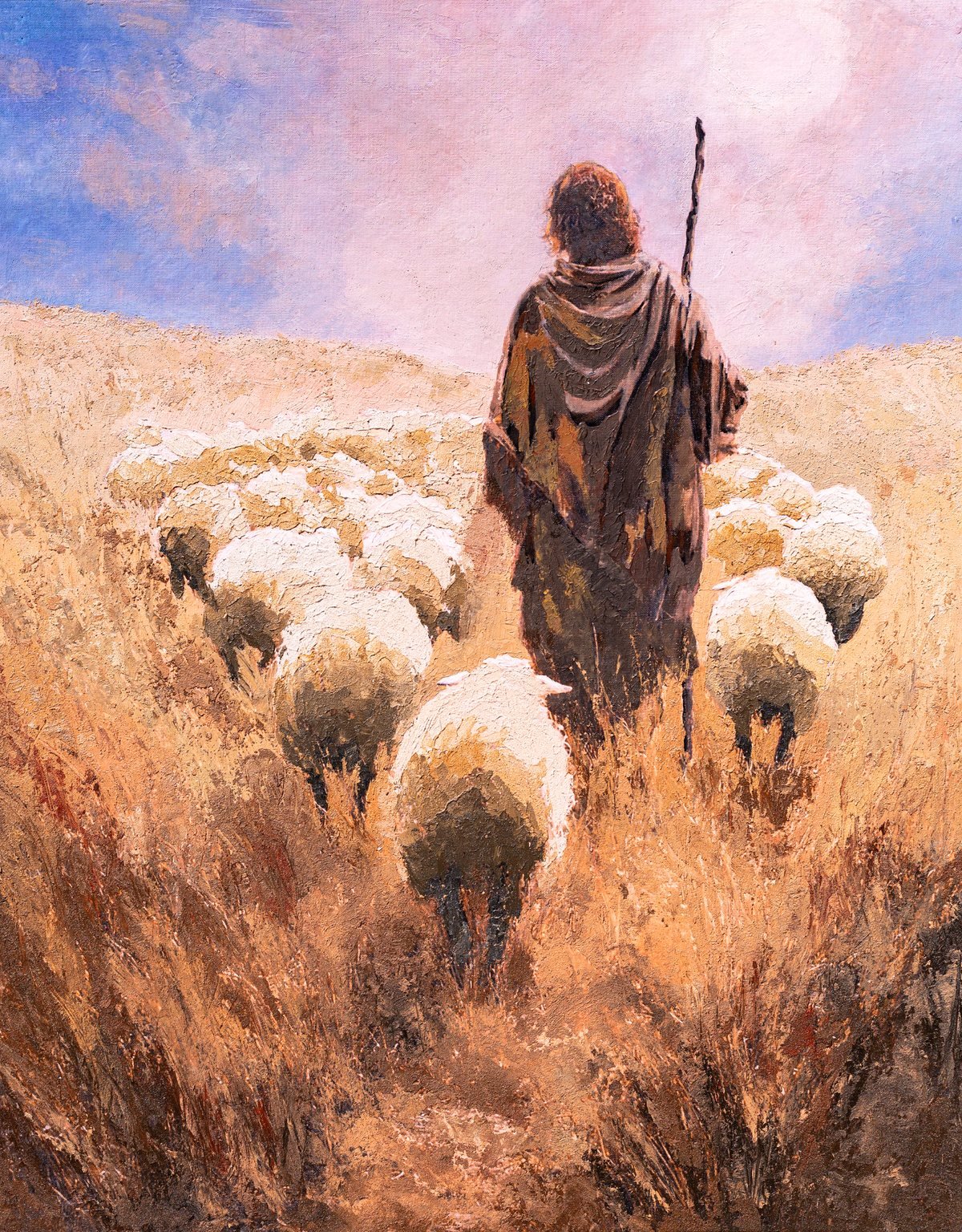
Photo AlchemyThe workbenchCollage and montageCut and rebuiltAfrican Art FusionWith Simon ShoneFor eighteen centuries painters have shown Jesus as a shepherd. When I came to paint Him myself, I turned Him around.
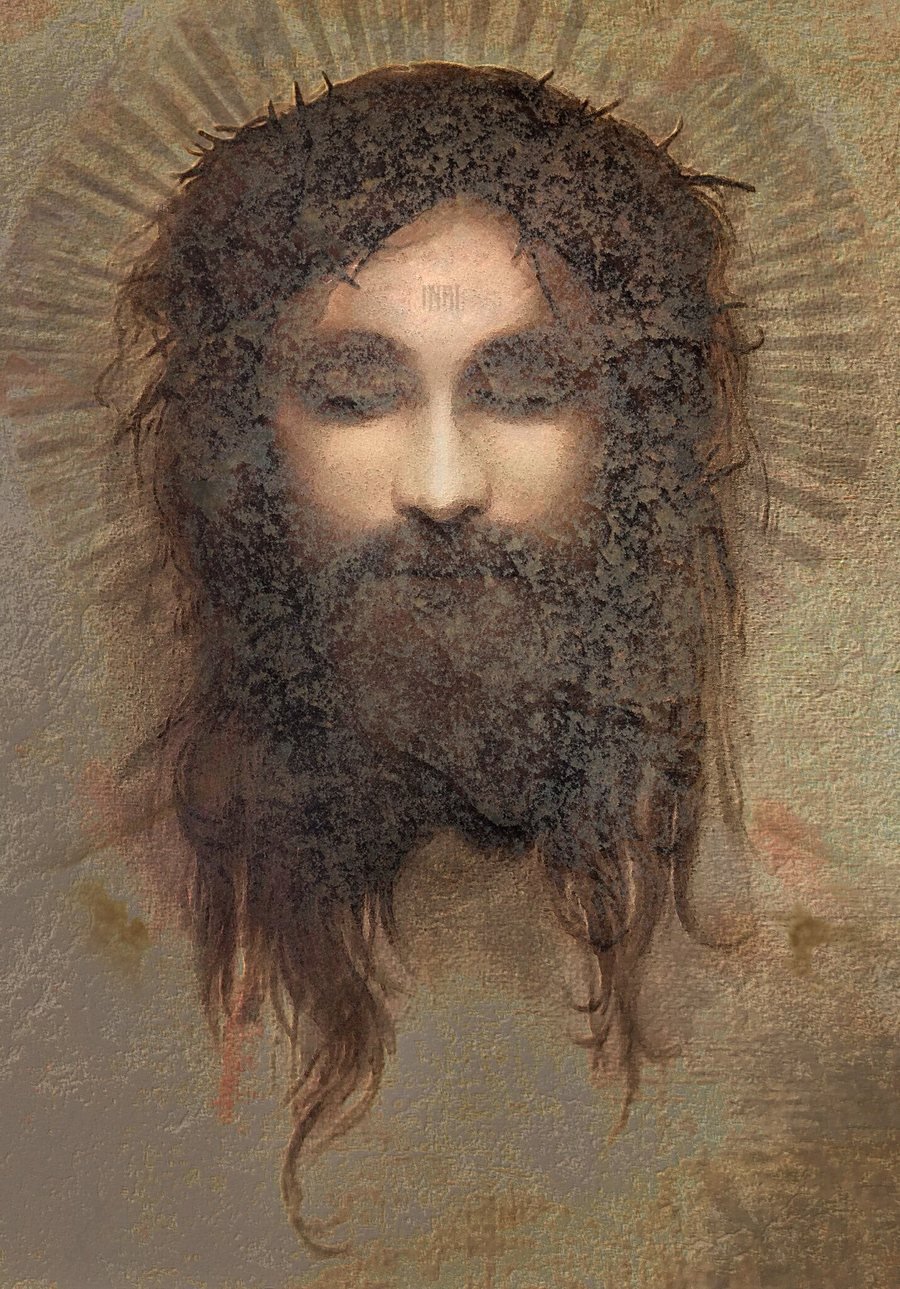
INRI, where the Lord's eyes stay closed.
Two things led me to this painting. The first hung in my grandmother's home: a print of the Lord, with eyes that seemed to open and close depending on which way you looked at it. It was always there in the room, and it stayed with me. Years later it became the starting point for INRI, though in my version His eyes stay closed.
The second was my wife, Anita. She came to me and said, why don't you do something a little closer to your faith? How could you show the Lord? That is where the inspiration for this particular piece came from.
I think she wanted the painting for the house, and to this day she says she'd like it to come over from the gallery to our home. So I'm caught between creating a piece for the gallery and creating a piece for our home. Either way, I guess it's a good thing.
The Good Shepherd is one of the oldest images of Jesus in art. In the catacombs of Rome, from the 3rd century, in the Catacomb of Priscilla and the Catacomb of Marcellinus and Peter, Christians painted a young, beardless shepherd with a lamb across His shoulders, long before the cross became their symbol. They borrowed the pose from an older Greek figure, the ram bearer, and gave it a new meaning. Around 425 it appears in mosaic in the Mausoleum of Galla Placidia in Ravenna, and in 2025 archaeologists found a 3rd century Good Shepherd fresco in an underground tomb near Iznik, the ancient Nicaea, in Turkey.
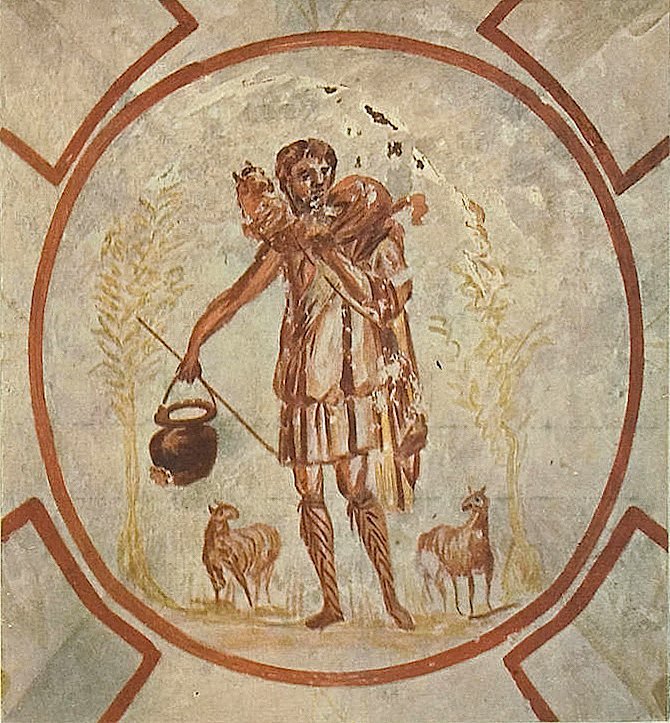
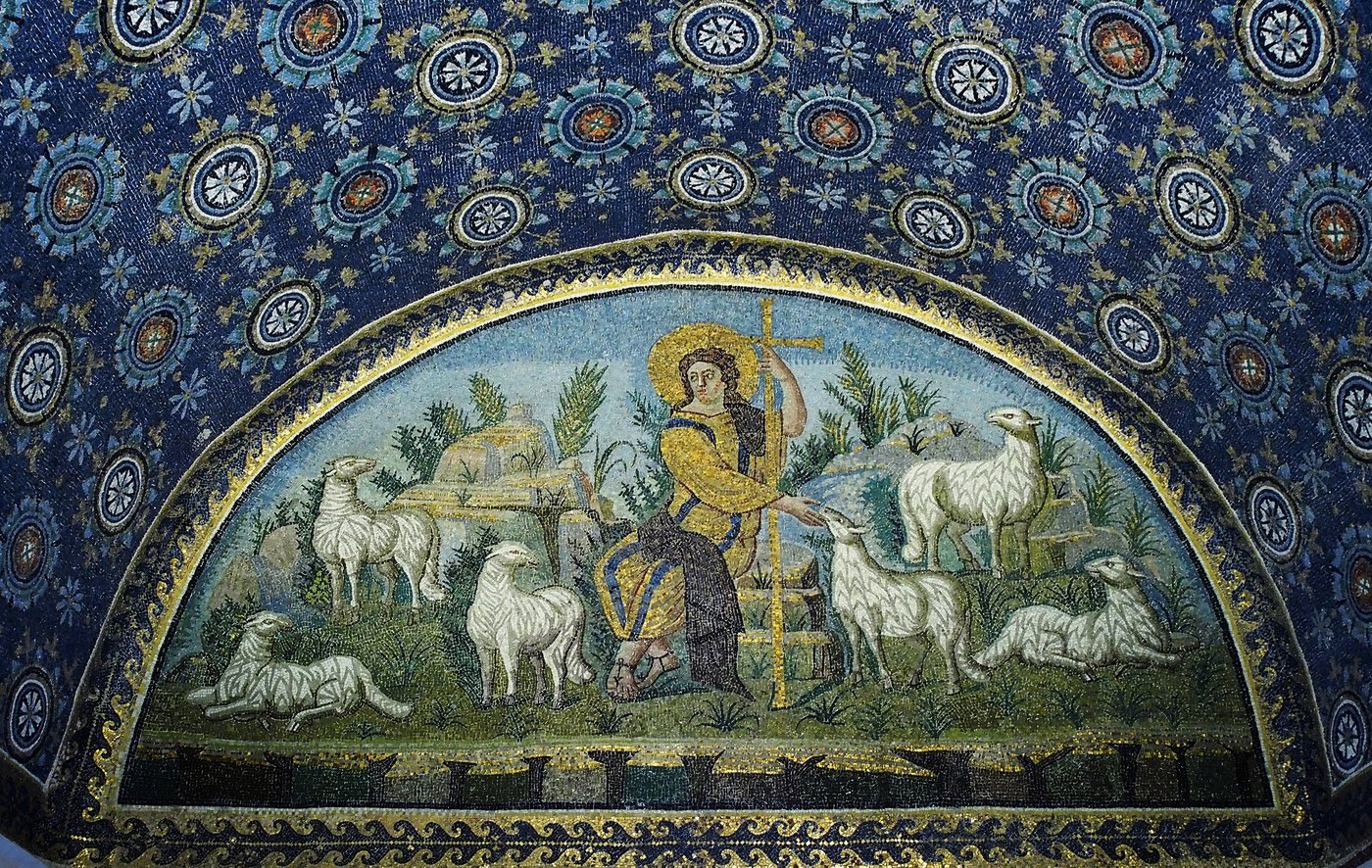
It's funny with this piece. Most artists would be tempted to paint Him carrying the lamb on His shoulders. I almost felt that I didn't want the painting to be recognised as an immediate connection to our Lord Jesus Christ. I wanted it to be obvious enough, but with a question left in it.
That is why I decided not to follow the same iconic style. The Lord says, "My sheep hear my voice", and that matters here, because it shows that the sheep are not interested in anything else but following the Shepherd.
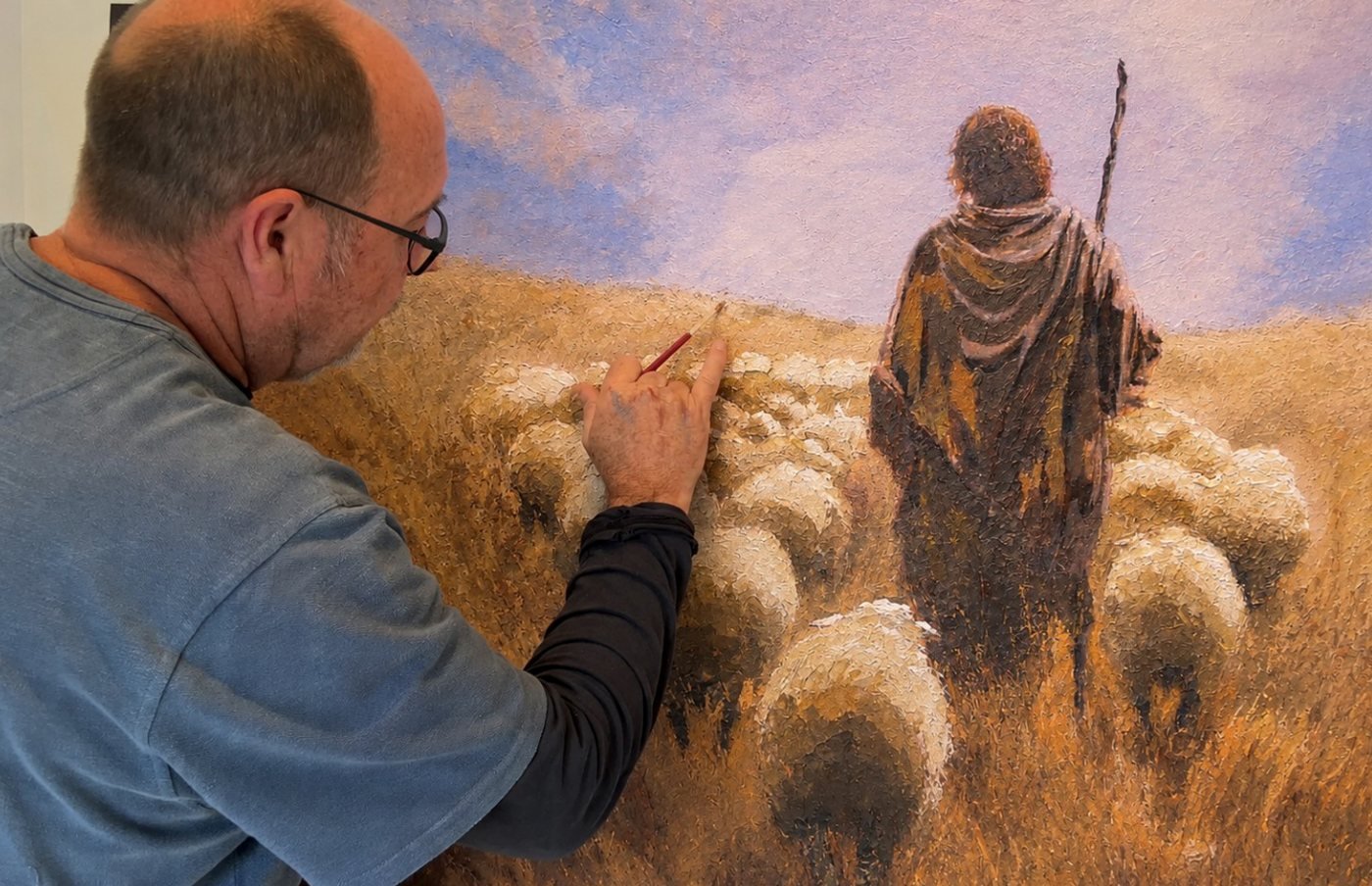
Painting the flock.
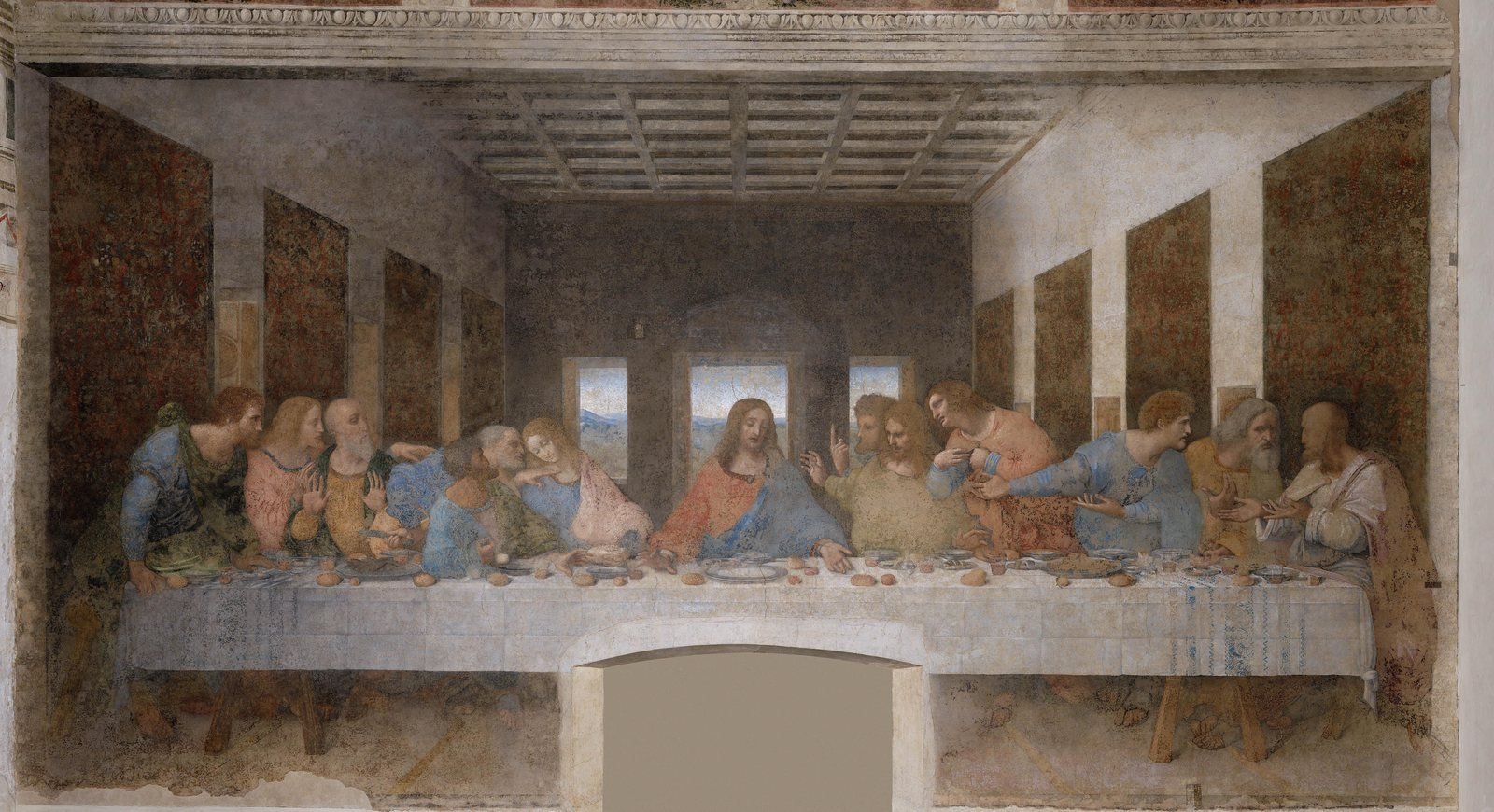
One cannot help but be motivated, encouraged and inspired by the wonderful paintings of the Renaissance: Giotto, Michelangelo, Raphael, and Leonardo's The Last Supper, which showed our Lord in a more human, connectable way, with realism rather than abstraction, living out the Gospel. We saw that begin to emerge as early as the medieval period, but the great masters of the Renaissance are something that I, as an artist, simply cannot ignore.
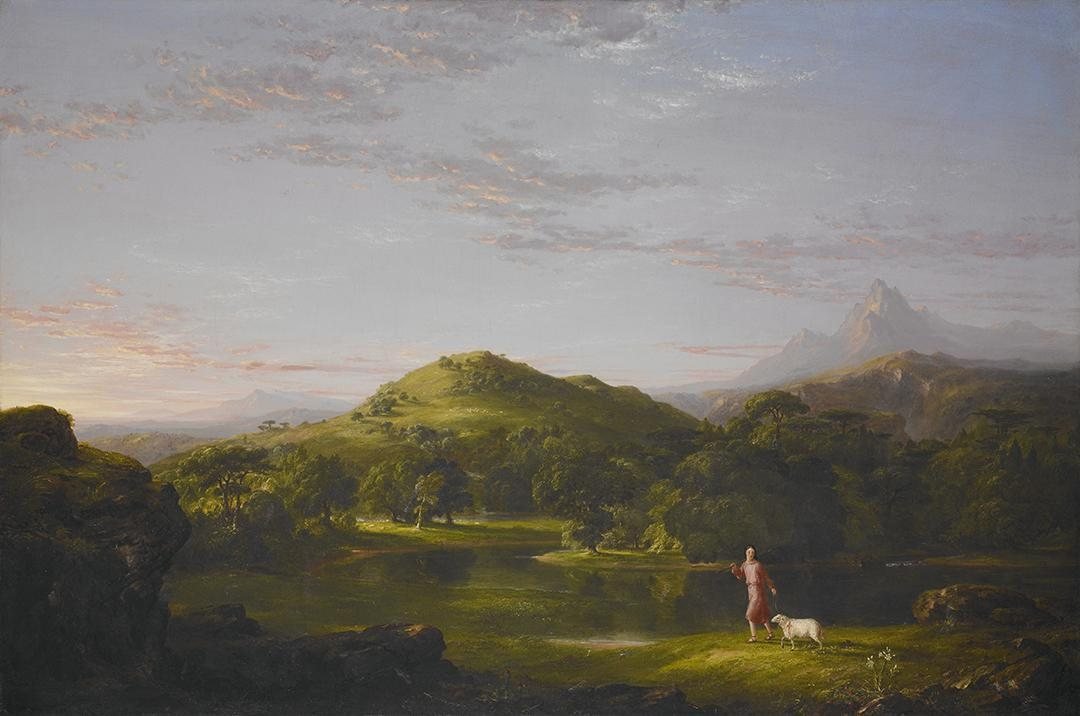
Then there is Thomas Cole's The Good Shepherd, painted in 1848. I very much enjoy the mystique of the shadow and highlight, and the beautiful softness of the sky, but I battle to connect there with the Jesus I know. It didn't feel like the carpenter's son. The painting is absolutely beautiful, but I knew I didn't want to make an environmental study like this. I needed to be a lot bolder. It isn't only about what inspires you; a lot also comes from what you are not seeing.
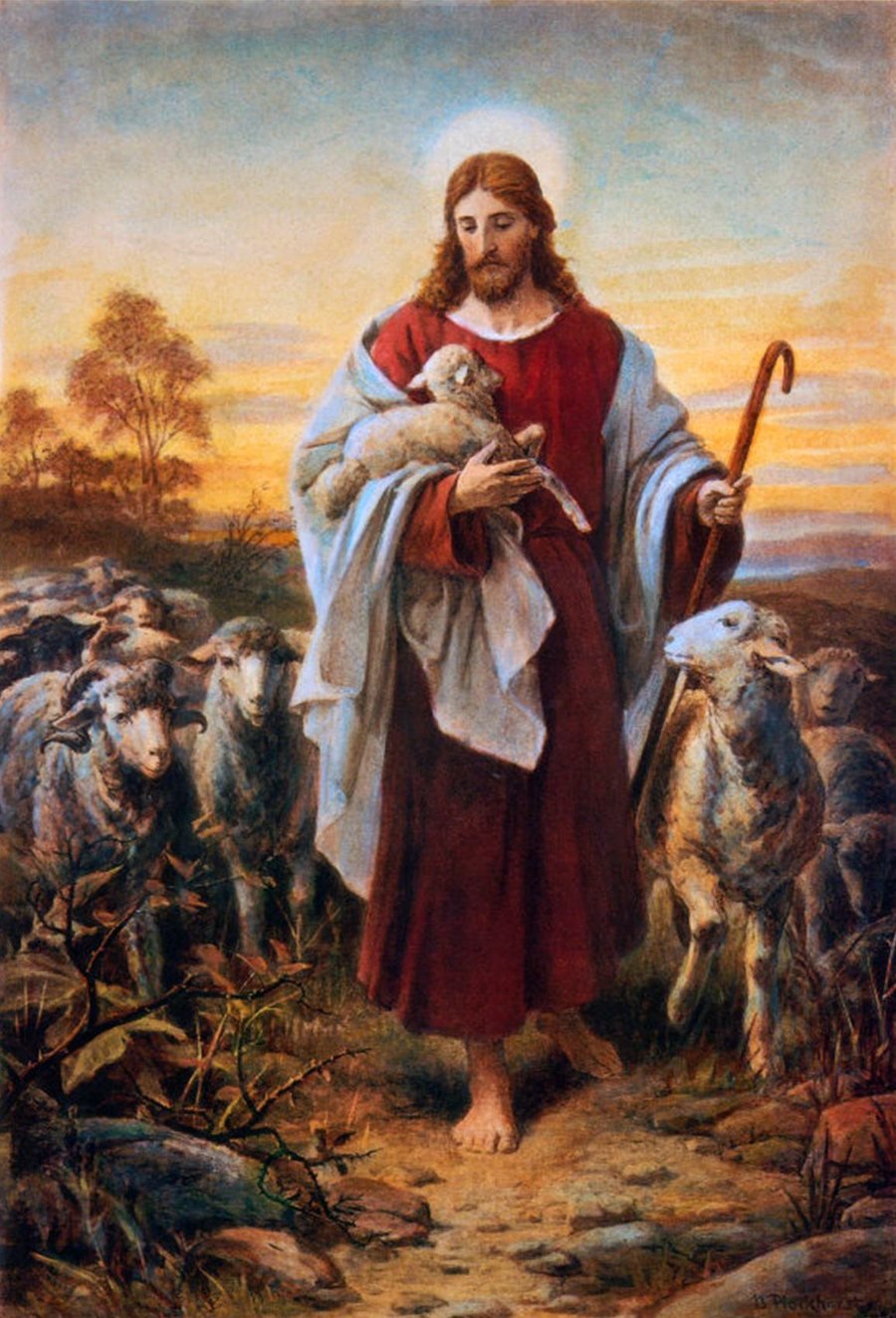
Probably the closest to my inspiration was Bernhard Plockhorst's The Good Shepherd, from 1878. That was the boldness I wanted to paint this piece with. But again, I wanted mystery. I didn't want the painting to be too literal, though his painting is absolutely magnificent.
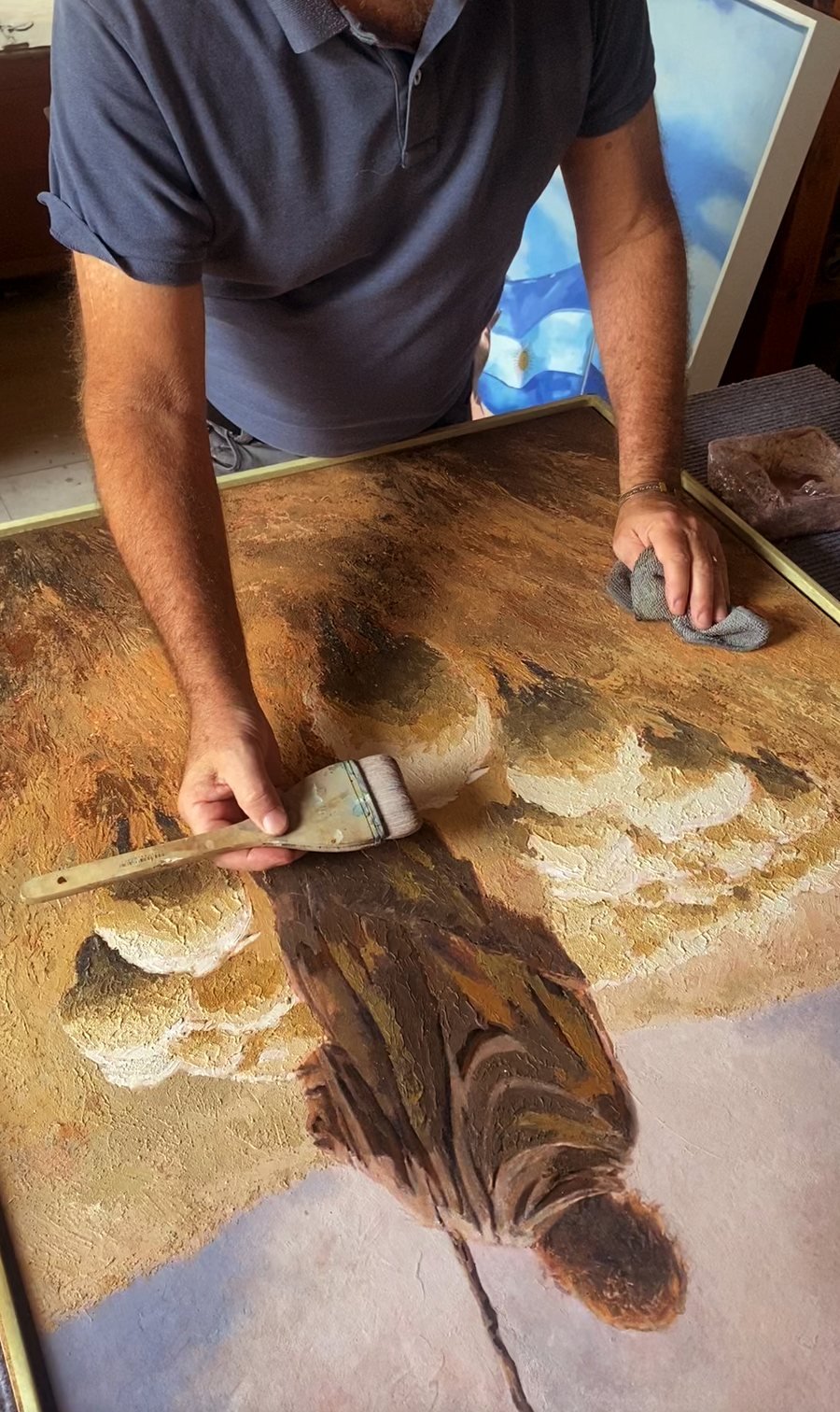
Working into the surface.
The hard thing about attempting a painting like this is the deep respect I have for my Lord and Saviour. The last thing I want is to create something that doesn't do justice to the enormity of His presence and power. Here is a person who divided the world's timeline into before Christ and after Christ, God incarnate, and I want to put paint on canvas and try to depict that. It's not easy.
That is one of the reasons I decided not to show His face, not to portray my own interpretation of His features, but to leave the mystery and open up the question: is it, or isn't it? Had I not called it Eternal Shepherd, it might have been even more mysterious. It's swings and roundabouts: on the one hand I'd love people to know what I've done, and on the other I'd like them to guess.
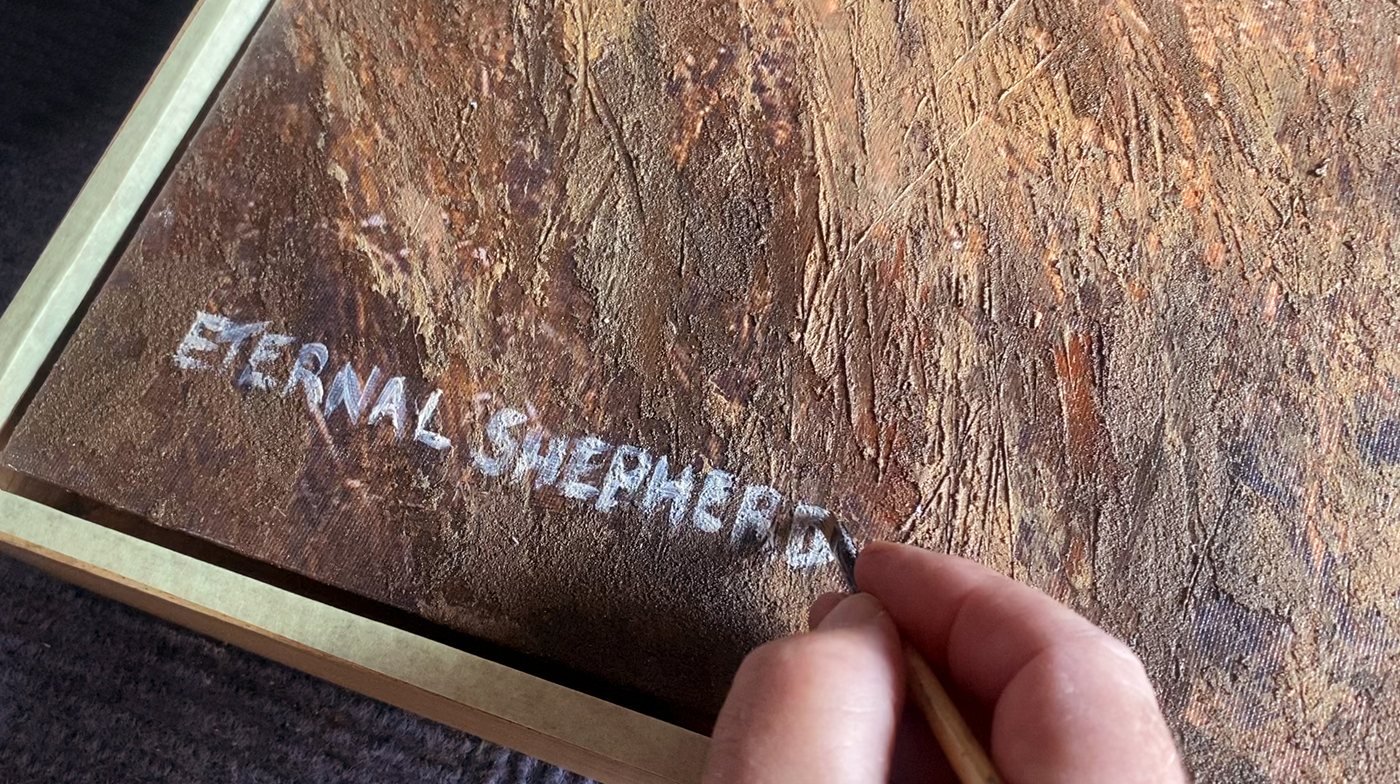
Painting the title onto the canvas.
The one thing about the Lord, and the ministry behind my faith, is that He is not boastful. He does not demand; He softly requests. God has a deep respect for us making our own choice. He doesn't come in and tell us we will; He suggests we should.
Free will has been an amazing, incredible and probably one of the most difficult gifts God the Father has bestowed on mankind: we can choose whether we accept or not, whether we open the door or not. The only way I could portray that was by showing the Lord heading off with His sheep. You're welcome to join, or not.
I think that is the big difference between a religious connotation and a relationship connotation. I'm sometimes fascinated by the artwork you find in churches, but it can be very religiously predictable. This kind of painting is about a relationship.
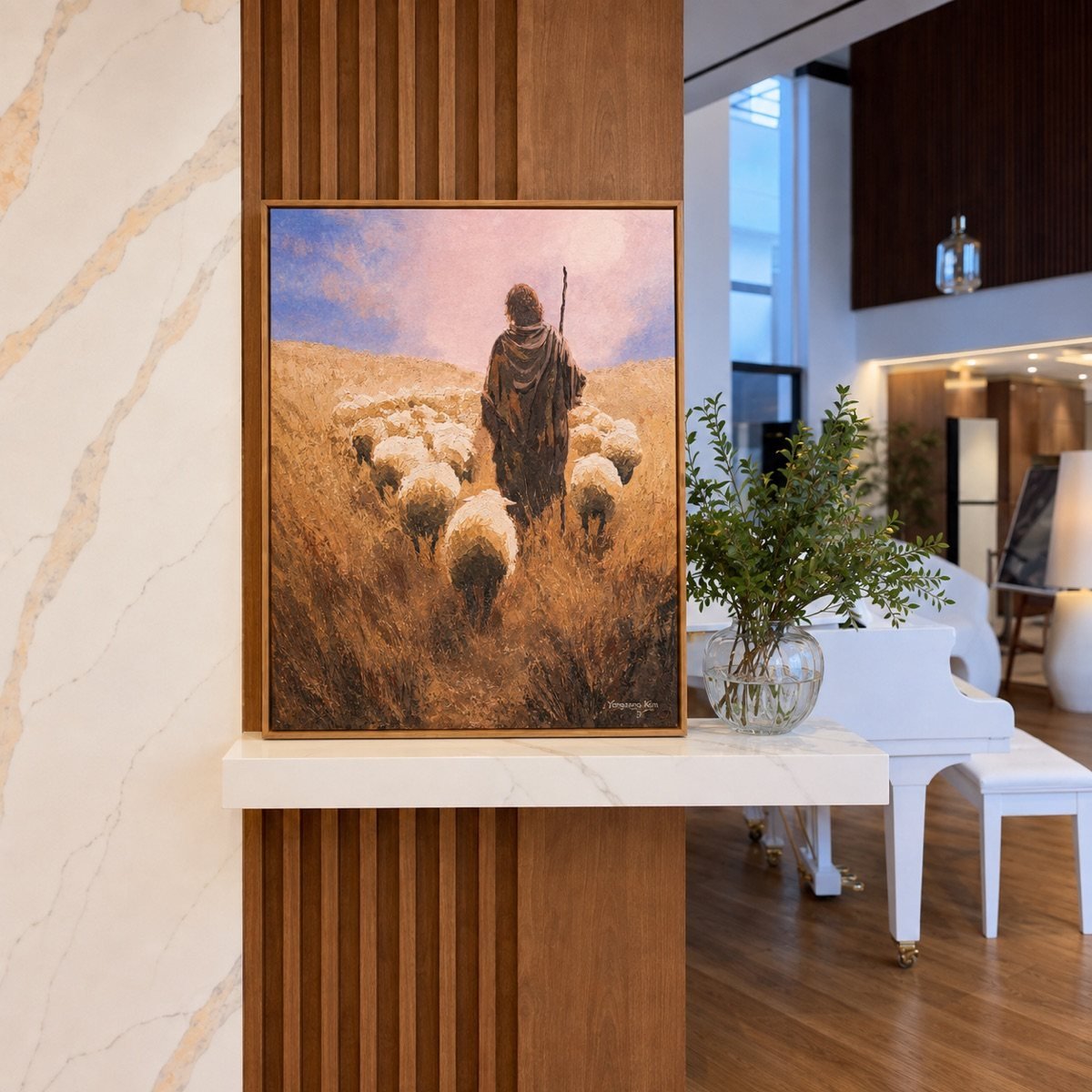
At the Echoes of the Earth exhibition, INARA Manor House, July 2026.
Since Eternal Shepherd has been in the gallery I have not received one single bad remark, and funnily enough hardly anyone asks who I have painted, because they know. It isn't confrontational, which I think is great. It's invitational.
That is what I would want any collector to feel about this piece, whether it hangs in a home, a church or a corporate office: a gentle invitation rather than a boastful call.
I've always said that my steps are gently ordered by the Lord, a caring God who makes a way and then orders your steps. That is exactly what the sheep are doing here. They follow because He is ordering their steps.
Christ as the one who knows, guides and protects His people, and gives His life for them: "I am the good shepherd: the good shepherd giveth his life for the sheep" (John 10:11). Behind it stands Psalm 23, "The Lord is my shepherd".
The earliest are 3rd century wall paintings in the catacombs of Rome. The mosaic in the Mausoleum of Galla Placidia in Ravenna dates from about 425. Bernhard Plockhorst's The Good Shepherd (1878) is one of the most reproduced, and Thomas Cole's The Good Shepherd (1848) hangs at the Crystal Bridges Museum of American Art. In 2025 a 3rd century Good Shepherd fresco was found in a tomb near Iznik, in Turkey.
It comes from the parable of the lost sheep: "when he hath found it, he layeth it on his shoulders, rejoicing" (Luke 15:5). Eternal Shepherd shows the other side of the same care: the flock following Him.
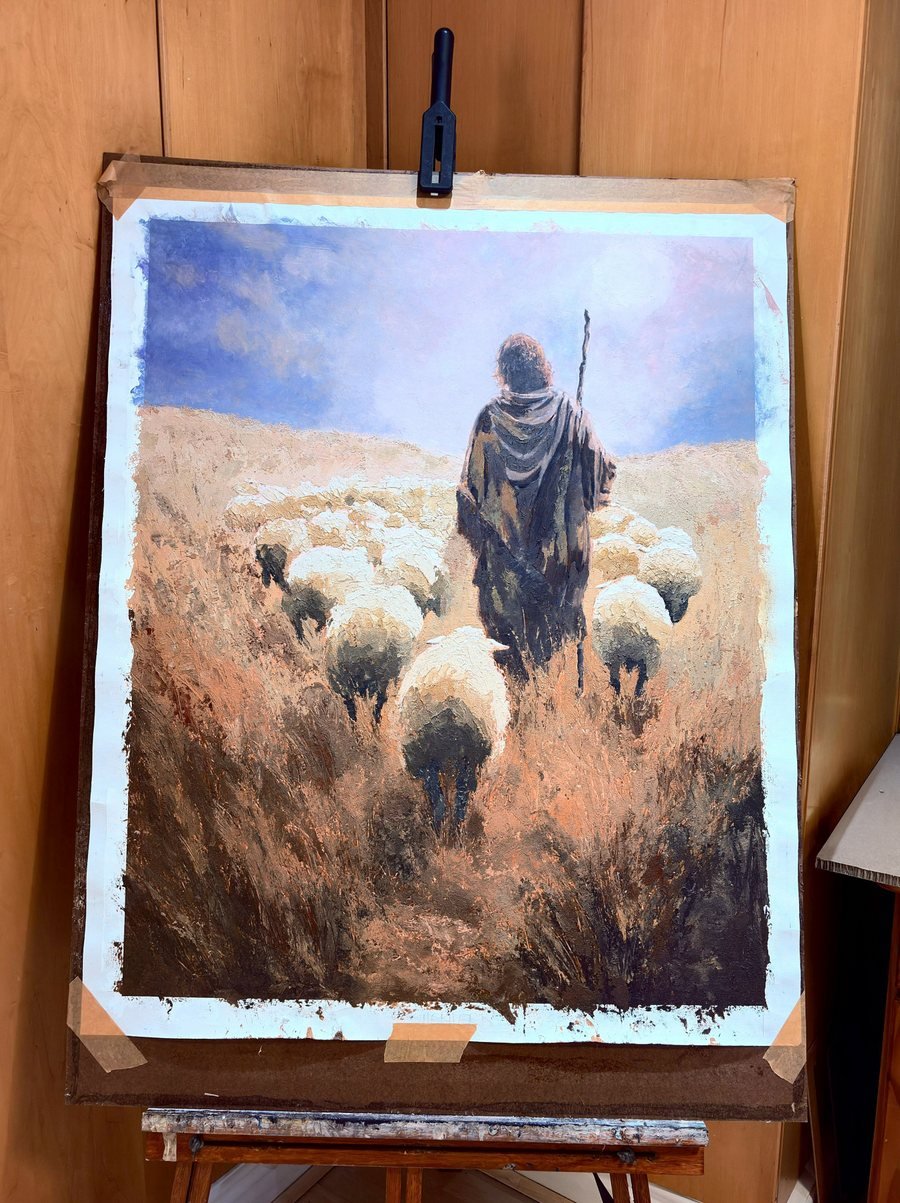
On the easel, still taped to the board.
There will, without a doubt, be a celebration print of Eternal Shepherd, so that the painting can go to more than one home. In the future I would also like to paint one with more of an abstract impression, to soften that connection even more.
Two earlier works approach the Lord directly: INRI and Son of God. The full story of how Eternal Shepherd was made, and why I nearly kept it for myself, is in the story behind Eternal Shepherd.
Martin Osner

Sold through Osner Art Gallery online, shipped worldwide, and shown in person at Osner Gallery in Hout Bay.
Go to the gallery
Online courses at the Art Photography Academy, live fine art classes on Zoom, and workshops on location.
See the coursesNew work and the stories behind it, exhibitions at the gallery and at INARA, and workshops with Samantha and Martin. Unsubscribe with one click, whenever you like.
We never share your address.